You may have land, a workshop you could use or a skill you could share. Start by considering which tools, knowledge or help from others you would need. In the tool below, choose your province in Türkiye, what you have and the kind of production that interests you; see which questions to investigate before starting.
This page helps you think through a starting point. It does not yet match people or places, or provide land, funding, investment or sales.
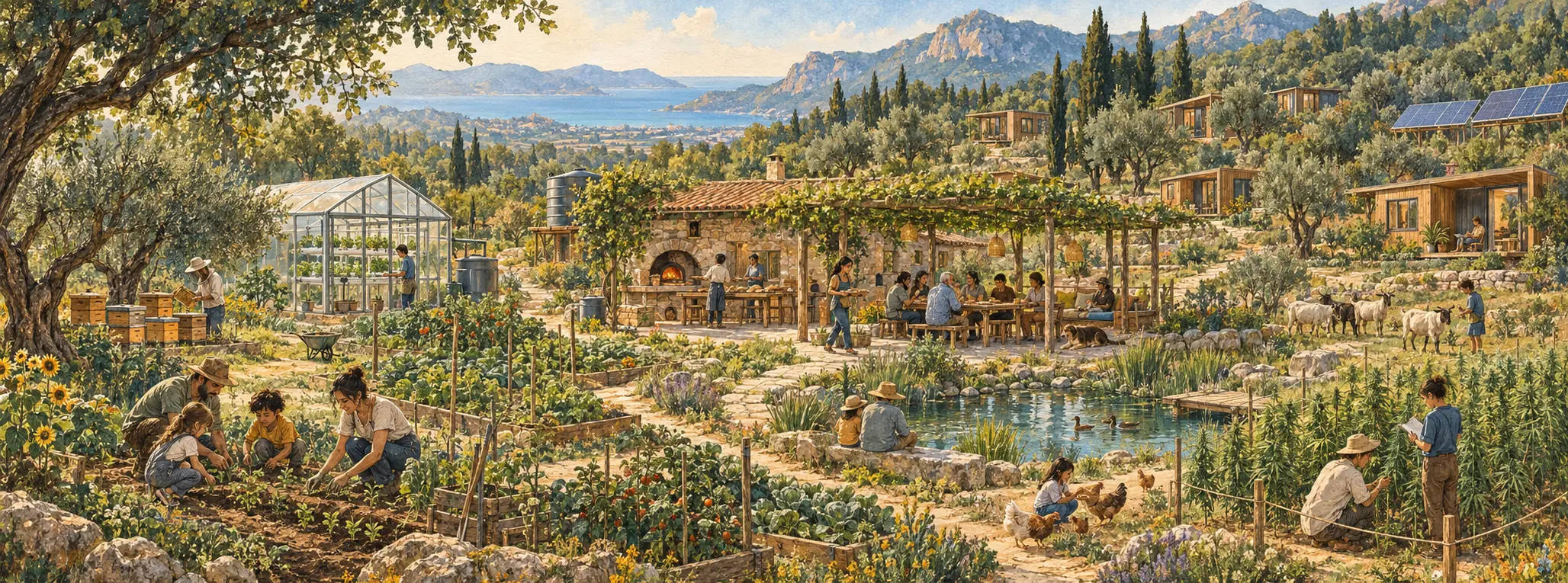
Conceptual future illustration · not a claim of ready land or an established facility.
01Land and means
02Maker or Circle
03Production
04Collection and processing
05Packaging
06Local / national distribution
07BenBiz Store
08User
SHAPE A PRODUCTION PATH
Make three choices; see your first questions.
Choose the closest option to what you have, the place and the production field. The questions to investigate and people to speak with below change with your selections. This screen does not submit an application or make a match.
Anything you add is for your own notes. Questions and the production path follow the categories selected in the menus; free text does not generate a tailored plan.
Anything you type stays only on this screen; it is not saved and does not submit an application.
RESEARCH NOTES FOR YOUR SELECTIONS
Vegetables, fruit and fresh goods · All of Türkiye
Local Market
Four questions to answer first
01
Who holds the land, and is permission to use it explicit and written?
02
What do water, soil, climate, access and local need tell us?
03
How will lease, use or shared production be agreed?
04
Are the producer and real capacity known?
ONE POSSIBLE EXAMPLE
A workshop is available. What could we do together?
This is an illustrative scenario showing how contributions could meet, not an announcement of an established project.
01
What do we have?
Someone can open their workshop two days a week. A craftsperson knows woodworking. Another person can photograph products.
02
What is still needed?
To make a small side table, we work out the materials, tools, time and costs together. We also identify any missing skills.
03
How could we begin?
We discuss making one sample first. We write down each contribution, its return and the delivery date, then decide together whether to continue after seeing the result.
WORKING TOGETHER
What could you contribute?
Completing a piece of work takes different contributions. One person offers a place, another makes something, and someone else shares knowledge or craft skills. One person may take on more than one role.
01
Landholder
If you have an unused place, you can discuss the conditions for using it for production. Ownership stays with you; use is defined through your explicit consent and a written agreement.
02
Maker and local grower
Explain what you can grow, its season and how much you can produce. Your local experience helps shape production decisions.
03
Expert
Use your knowledge of soil, water, food safety, design or another field to help answer questions and assess the options.
04
Processor and craftsperson
You might dry, mill, sew or package a product. The work, equipment you need and responsibilities are discussed before starting.
05
Transport and delivery
Help plan where a product is collected, how it is stored and transported, and who receives it. Distance, timing and cost are clarified together.
06
User
Share what you need, ask where a product comes from and describe your experience. This helps makers see what they could improve.
Before starting, agree who will do what, how much time they will give and what they will receive for their contribution. Land, work, knowledge and equipment are recorded separately; sale amounts, contribution points, barter and future BenAkçe/BenGram records remain distinct.
ISTANBUL · COORDINATION
Plan shared work together and production locally.
In the arrangement we envisage, a shared team follows records, communication and preparation. What to produce and how to work are discussed with the people who would do the work locally. İstanbul coordination and local work describe this planned arrangement.
Track work and responsibilities
Prepare agreements and accounts
Shared digital tools
Communication and promotion
Speak with institutions
Learning and planning together
TÜRKİYE · PLACE-BASED PRODUCTION
A starting point can emerge in any province
A first study can be considered when a need and people able to address it come together. Selecting a province does not mean an established production centre exists there.
Understand the conditions on the ground
Water, climate, access, skills and processing facilities vary between districts. Discuss what to produce after examining the actual local conditions.
Local people have a say
Makers, landholders and local residents share their needs, experience and the work they can undertake. The production plan takes shape with that knowledge.
No province is treated as a ready production centre. Every start is considered afresh with real local information and people.
BEGINNING WITH A PLACE
You have a place. Is it suitable for production?
An empty piece of land or an unused workshop is only a starting point. Before planning production, understand the place, the people who would work there and what the work needs.
Who can use it, and on what terms?
Clarify the owner’s consent, duration of use, responsibilities and necessary documents before starting.
Does it have what the work needs?
Assess water, electricity, climate, access and equipment on site for the production being considered.
Who would work here, and what do they need?
Discuss local knowledge, skills, available time and any help still needed.
How would products be prepared and delivered?
Consider the space, equipment and costs of processing, storage, packaging and delivery from the beginning.
Explore land and support research routes
These are routes for research, not land granted to BenBiz or funding already secured. Current conditions need a separate review for each concrete project.
01
Public programme or notice
Only current official notices from the Ministry, Forestry Directorate, National Property authority or relevant institution are researched; seeing a programme title does not confer a right.
02
Unused private agricultural land
It never enters the system without the landholder’s explicit consent, verified ownership and a legally defined lease, use or shared-production agreement.
03
Production or R&D support
IPARD, rural development or other programmes are considered only through a current call, eligibility, budget and institutional review; no support is guaranteed.
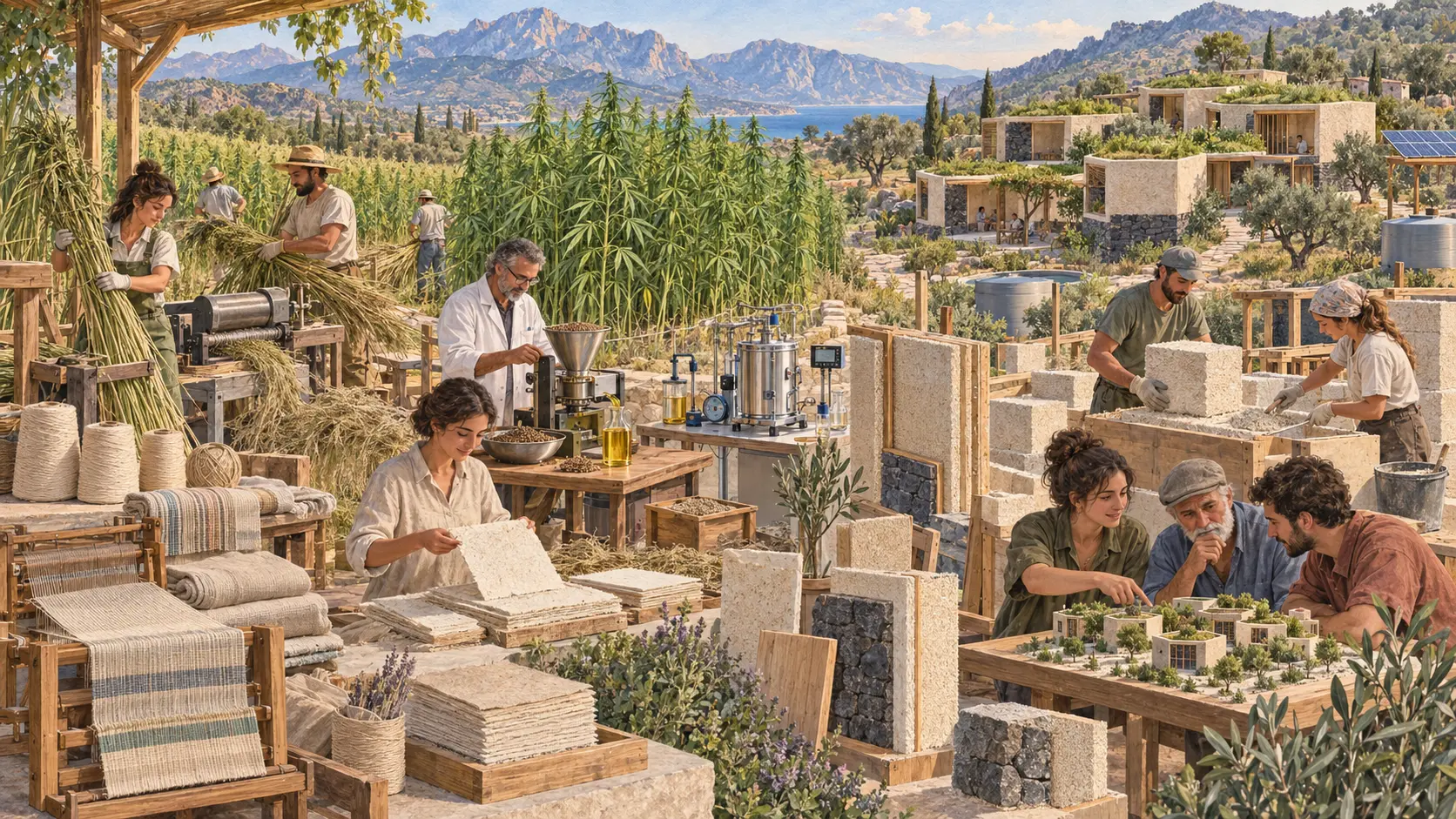
An illustrative production idea, not an established facility or active operation.
INDUSTRIAL HEMP · A RESEARCH PATH
Think through the path from field to product.
A textile or building-material idea involves more than growing a plant. Explore where the raw material would come from, who would process it and which product it could become.
For which product?
First clarify the intended product and use, such as fibre, textiles or building materials.
From raw material to processing?
Review seed and variety, raw-material sources, processing equipment and the skills needed separately.
Under which permissions and product conditions?
The idea becomes a Store record only after cultivation permissions, product safety and marketing rules have been reviewed.
The regulation dated 31 January 2026 is one of our starting sources. For a concrete project, the rules in force are checked again with the competent authorities and specialists.
Fresh goods · with delivery radius, harvest and meeting point
02preparation
Türkiye Shelf
Shelf-stable or packaged goods · with shipping and storage verification
03preparation
Value-added Goods
With processing, ingredients, batch and safety records
04example present
Services and Learning
With programme, expertise, duration and participant limit
05member listings open
Barter and Sharing
Introduce your product, skill or space through a listing; discuss the return and delivery conditions through offers. Payment collection is not connected yet.
06lab
Shared Need and Production
Without confusing an interest signal with real demand
WHAT BELONGS IN A PRODUCT RECORD?
What do we need to know about a product?
Today’s cards do not show every detail. As real records arrive, the information needed for sales, delivery and traceability will keep its own place.
01Who and where?+
Production region · maker or Solidarity Circle · connected storefront · responsible party
02How was it made?+
Production method · evidence and verification state · harvest / production period · raw, processed or packaged
03How much and when?+
Real capacity · preparation window · seasonality · freshness and storage conditions
04How does it travel?+
Local delivery boundary · pickup point · shipping suitability · required transport conditions
05How is it traced?+
Production batch · record version · statement and evidence source · correction, appeal and recall trail
06What is its state?+
Discovery · pilot · preparation · sale · barter; distinct states that do not collapse into one
THE LEGAL AND FINANCIAL SIDE
They may serve the same future without doing the same job.
When sales begin, it must be clear who carries production, payments and learning. The frame below expresses an intention; it is not an appointment made today.
01
The first transaction period
Once the required permissions, agreements and accounting arrangements are in place, a suitable commercial business may carry a limited first payment and invoicing pilot. The role would be defined openly after legal and financial review.
02
Cooperative path
Production, joint procurement, processing, packaging and sales organisation may gradually develop through a cooperative structure. We are not announcing an established or active BenBiz cooperative today.
03
Foundation path
A separate foundation structure may be considered in future for learning, research, public benefit, support and social work. We are not announcing an established or active foundation today.
STEP BY STEP
Start by completing something small together.
00
Listen
Need, opportunity and intention are recorded separately.
01
Know the place
Rights, consent, water, soil, climate, access and local need are considered together.
02
Agree together
Roles, duties, decisions and economic rights are written in language everyone can understand.
03
Small pilot
Limited production or service is tested in real conditions; outcomes and failures are recorded.
04
Become visible in the Store
Verifiable information, stories and capacity take their place in the Store; sales may remain closed.
05
First sales trial
Payment and invoicing responsibility, price, stock, delivery, returns and accounting open only after separate tests.
OFFICIAL SOURCES WE CONSULT
They show a path; they do not grant a right on their own.
Rechecked on 15 September 2026. Programmes, calls and rules can change. The Forestry circular and National Property communiqué do not by themselves mean a current notice or eligibility; the text in force is checked again when a concrete decision is made.
Use the tool above to think through your needs, explore maker stories and prepare an exchange listing for your contribution. Describe what you offer with photographs or a presentation video, including scope, timing and what you expect in return. The production network does not yet offer automatic matching or guarantees of work or income.